The Summer of Math Exposition
Announcement for the SoME1 Competition
We want to encourage more people to put out explainers of math online. This is a competition where anyone can submit a video, blog post, interactive game, or whatever else they dream up, and after the deadline we will select 5 to be featured in a 3Blue1Brown video. Winners may also receive gold pi creatures. I mean, probably not gold gold, but it would be something unique and emblematic of your greatness.
For the rest, we will put together a playlist of the video entries, and have a list of submissions on this website. To trade tips, share partial progress, and otherwise interact with others involved, join the discord.
Note from August 22nd, 2021:
Submissions are now closed. We received over 1,300 entries, which is outstanding! Thank you to everyone who participated, we genuinely hope you keep producing online math explainers after this. We plan to announce winners by September 14th.
Note from July 19th, 2021:
Since announcing the contest, Brilliant came in to offer a total of 5,000 in cash prizes to be split among top entries. We'll split it evenly, allocating 1,000 each to the five entries selected to be featured in a video
Why do this?
It's hard to overstate how powerful it is when anyone can learn something they want just by searching online. In a thousand subtle ways, when these explainers exist, projects go faster, school becomes easier, and math-phobia becomes a little bit less common.
A lot of excellent lessons and intuitions stay confined to isolated classrooms, or worse, confined to some individual's head. It takes effort to make videos, or blog posts, and to put them out there. Here, we're hoping to offer a little bit of activation energy to anyone who has thought about doing something like this, but just never got around to it.
Who is this for?
Honestly, anyone who might benefit others by sharing their knowledge. This could include teachers who want to take what they've learned to work well in a classroom and put it online, students who want to deepen their own knowledge by putting together an explainer, mathematicians who want to get involved with outreach, engineers who want to share what mathematical tools they use on the job and how, etc.
Entries from groups or teams are welcomed and encouraged too.
What are the constraints for entries?
- It has to be something new you make this summer
The spirit of this is to encourage people who've never put stuff online before. If you want to work on something you sort of started once before, that's probably fine, but it can't be something you already published before this contest. Optimally, you'd use this as a chance to try something new you otherwise might not have.
- It has to be about math.
Here we mean "math" very broadly, and more applied topics like physics or computer science are abundantly welcome. It just has to be the case that a viewer/reader might come away knowing something mathematical they didn't before.
The topic could be at any level, whether that's basic math for young children or higher-level math. If you're assuming a certain background level for the target audience, kindly mention it below. It's hard because we don't want to discourage topics with a very niche target audience, as those lessons can sometimes be the most valuable. However, if your lesson assumes particular expertise, e.g. a comfort with algebraic geometry, keep in mind that our judges may not fit into this category. So to actually win the contest, it's helpful if the topic is accessible to someone with, say, a background in standard undergrad math topics.
- One entry per person/group
We hope you make more, but we only have the capacity to judge participants based on a single entry.
- It has to be available in English
If you want to put out an explainer in another language, wonderful! Please do! But the judges here will be english speakers, so to be considered for the contest the lesson has to be accessible to them.
- It has to be publicly visible and available for people to consume for free
How will winners be selected?
Here's what we're looking for:
-
Clarity: Jargon should be explained, the goals of the lesson should be understandable with minimal background, and the submission should generally display empathy for people unfamiliar with the topic.
-
Motivation: It should be clear to the reader/viewer within the first 30 seconds why they should care.
-
Novelty: It doesn't necessarily have to be an original idea or original topic, but it should offer someone an experience they might otherwise not have by searching around online. Some of the greatest value comes from covering common topics in better ways. Other times there's value in surfacing otherwise obscure ideas which more people should know about.
-
Memorable: Something should make the piece easy to remember even several months later. Maybe it's the beauty of the presentation, the enthusiasm of the presenter, or the mind-blowingness of an aha moment.
To select the final winners, a small group of judges will look through the entries with the criteria above in mind. Depending on the number of entries, we may have a step to pre-filter entries before these final judgments. In all likelihood, to be considered for the competition, we may ask you to peer review some of the other participants' submissions. This would involve looking at five other entries and ranking them 1-5 based on how well they fit the criteria above, at which point we'll use the cumulative scoring which comes from those rankings to determine a final set of a few hundred which is manageable for our judges.
For longer works, judges might not be able to consume the full video/post. Again, what's hard about this is that sometimes great explainers are longer, such as a full lecture and we don't want to discourage those. Just understand that to select winners, there is only so much time, so the substance of your work should be clearly visible with a 5-10 minute view.
Advice
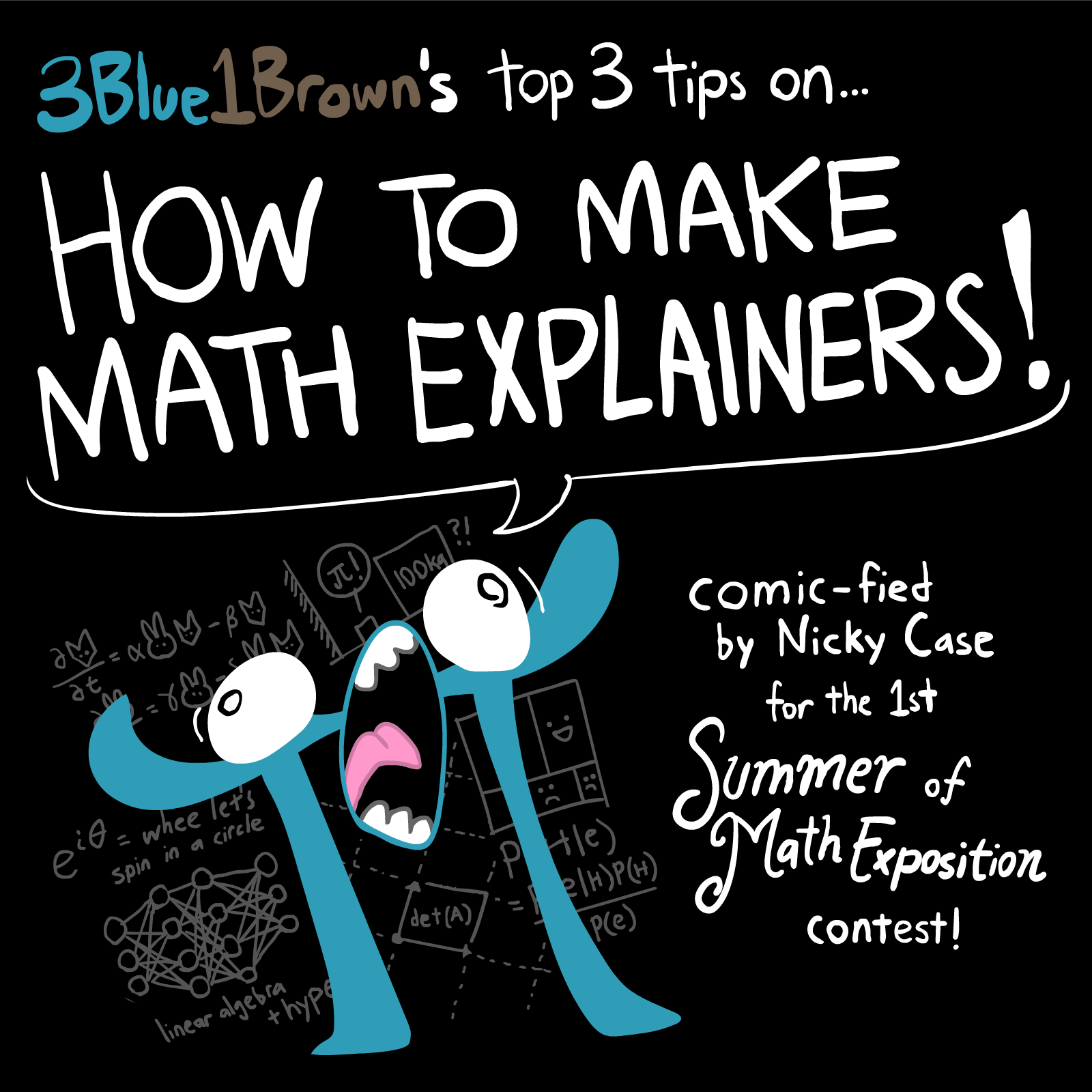
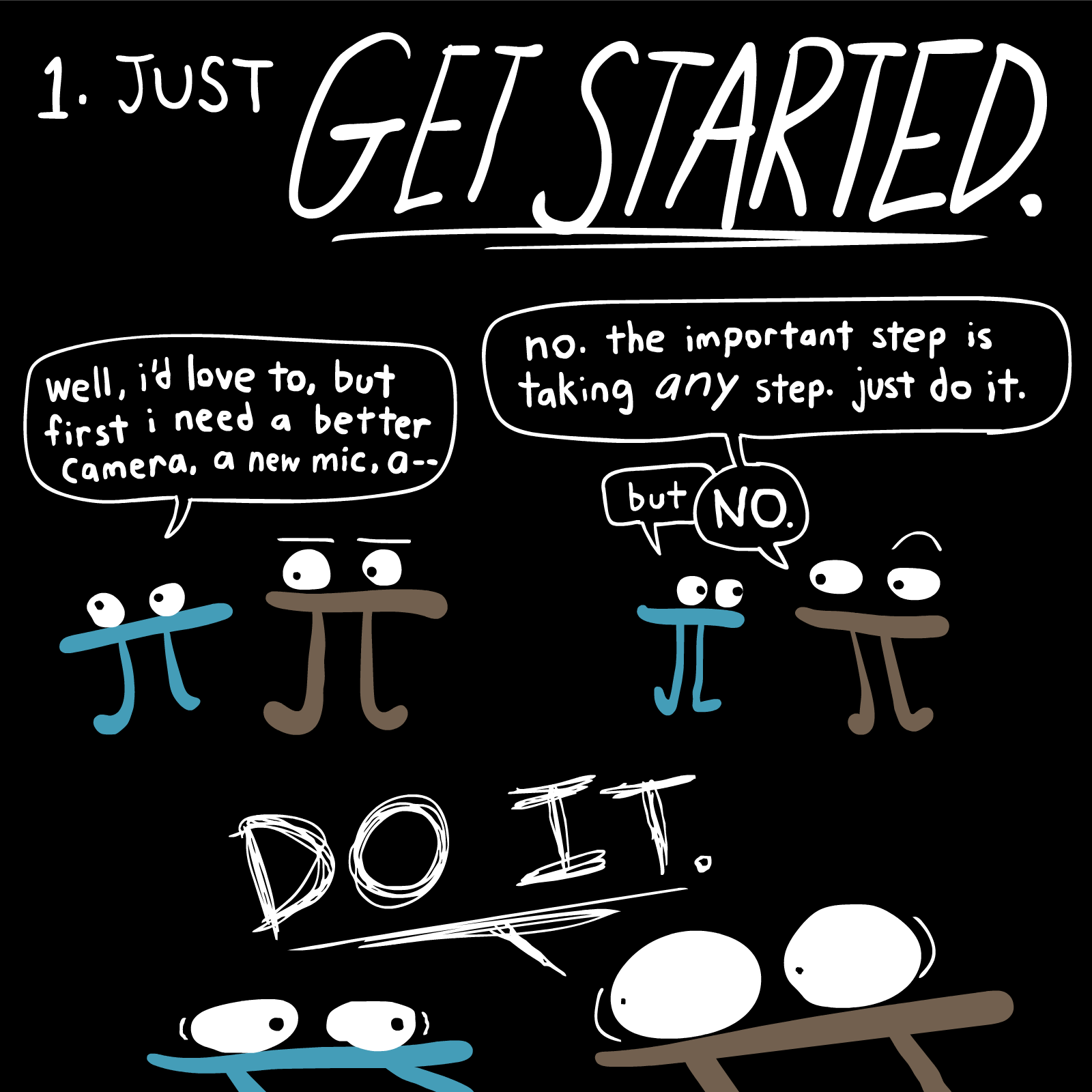
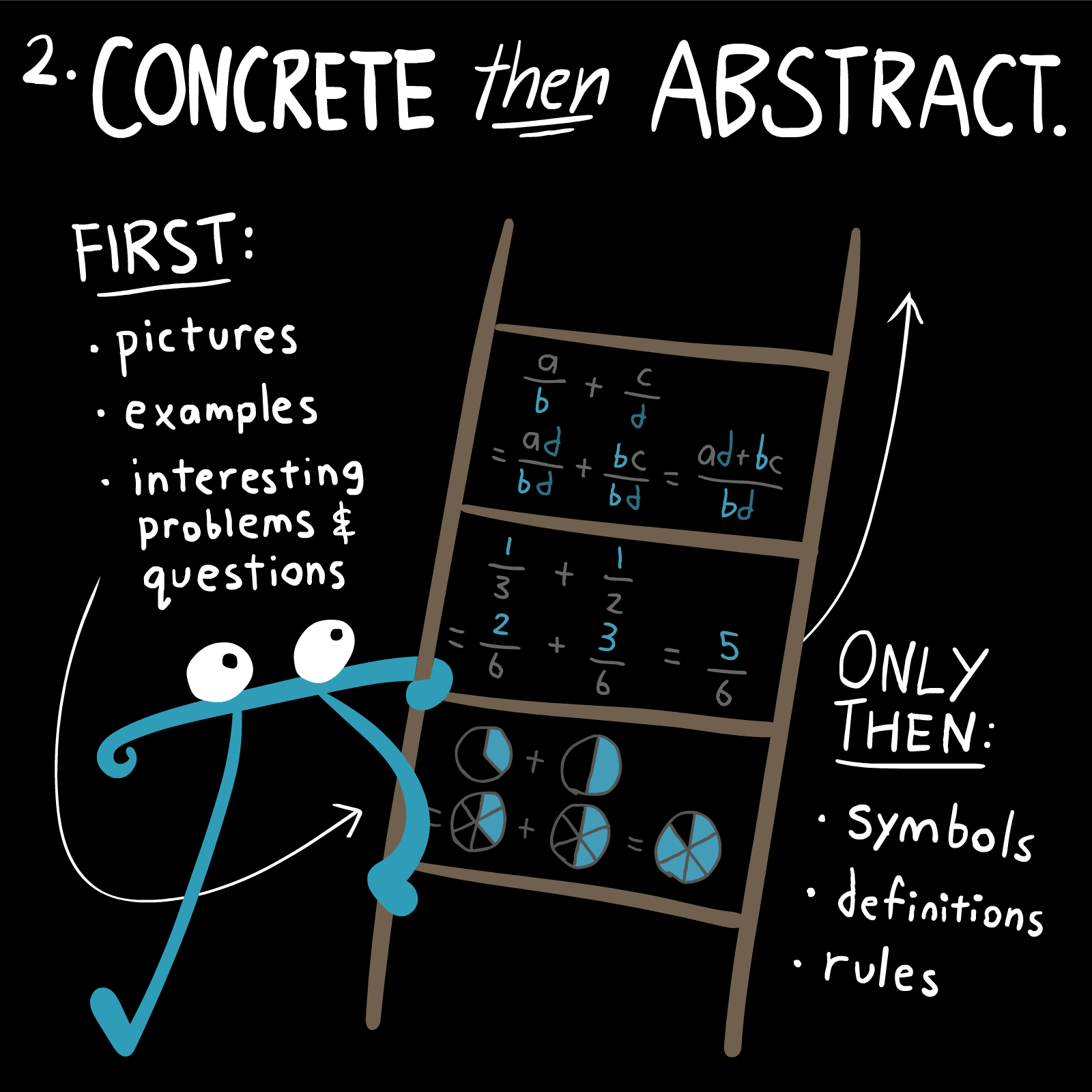
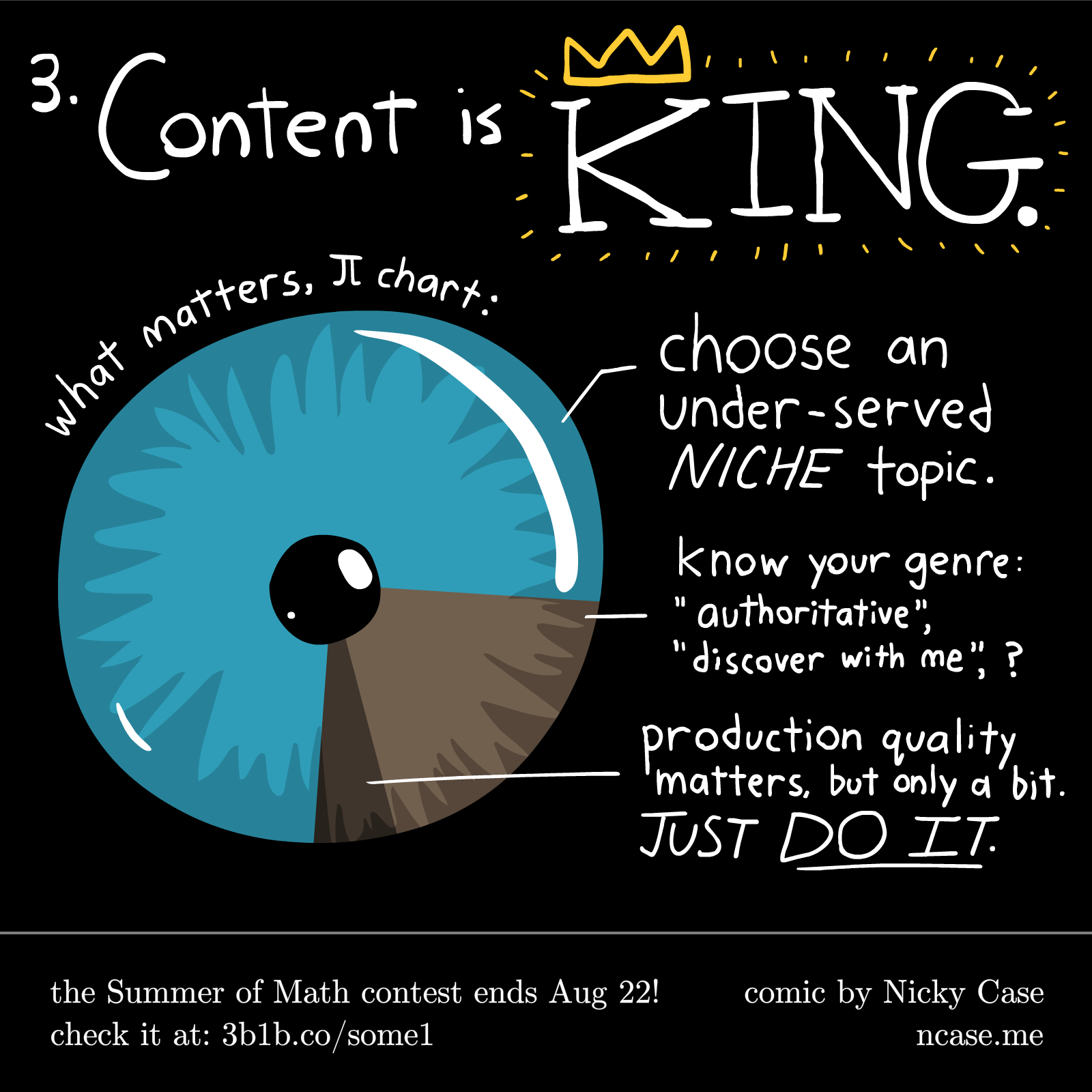
Nicky Case made a delightful little comic encapsulating three of pieces of advice for math exposition mentioned in the video above.